Feeds:
Posts
Comments

I have had many requests for Indian recipes.  While many Indian foods are gluten and allergy free, there are many others which have to be excluded from the gluten free diet. For anyone allergic to gluten, the chapati / paratha / puri is by far the most missed item in an Indian meal.

The chapati is also great substitute for the Mexican tortilla especially if corn is an allergy issue. Just substitute tapioca or potato starch for corn starch in my Gluten Free flour Mix recipe, which is right below the Start Here, at the beginning of my blog.  You will also find it in the Basics, or Cakes. Cookies and Desserts section.

Try the gluten free chapati / tortilla and see how soft and pliable chapatis remain long after they are made.  Serve them hot off the tava (skillet), or store them in an insulated container for later use, or even freeze them, then microwave and serve.  They are perfect to take along on a journey, rolled up with a favorite filling– anything from small pieces of chicken or paneer tikkas, aloo subzi, to sweet fillings like ghee and jaggery paste or strawberry jam can go in the chapati roll.  They are simply great for  school lunch as well.

Call them tortillas and make quesadillas with Mexican fillings, or prepare enchiladas with them. Fold them like wraps with salad/ cold meats, leftover cooked meats.  Or make quick and easy roll ups for hungry kids in a hurry.


DSC02684

Ingredients                                                            Makes 10-12

  • 2 cups Grandma’s Gluten Free Flour Mix 
  • 1/2 cup boiled and mashed potato
  • 1 Tablespoon plus one teaspoon oil (divided use)
  • 1 cup warm water (approximately)
  • 1 heaped tablespoon rice flour, mixed with a Tablespoon of corn starch for dusting
  • 1 Tablespoons or a little more, of oil or ghee for smearing on the pan or on the chapati./ tortilla.

Method – To Prepare the Dough

  1. Place flour mix in a large bowl, with mashed potato and 1 Tablespoon oil.
  2. Rub the potato and oil into the flour to incorporate well.
  3. Add half the water and start to knead the dough.
  4. Slowly add the remaining water (as needed), kneading all the time.
  5. Note:  Gluten free flours usually require more kneading than wheat flour to acquire a soft, smooth texture.
  6. Add a little more water if required.
  7. When you are able to form the dough into a ball, smear your hand with a little oil and continue to knead to make a smooth dough.
  8. Place prepared dough in a bowl, cover and allow it to rest for about 15 minutes.

Method – To Prepare the Chapatis / Tortillas

  1. Place the rice flour and corn starch mixture onto a plate and keep it at hand.
  2. Tear off two large sheets of plastic wrap, about 10” long  Place one sheet on rolling surface and the other on any clean, dry surface nearby.  Take care to ensure that plastic sheets are not close to stove top.
  3. Heat a tawa / skillet on medium- high heat, till well heated.
  4. Divide dough into 10- 12 equal sized balls.
  5. Roll each ball smoothly with your hands, press and flatten to form a disc.
  6. Take one flattened ball and dust it lightly with the flour mix kept on plate.
  7. Place on top of plastic sheet kept on rolling surface.
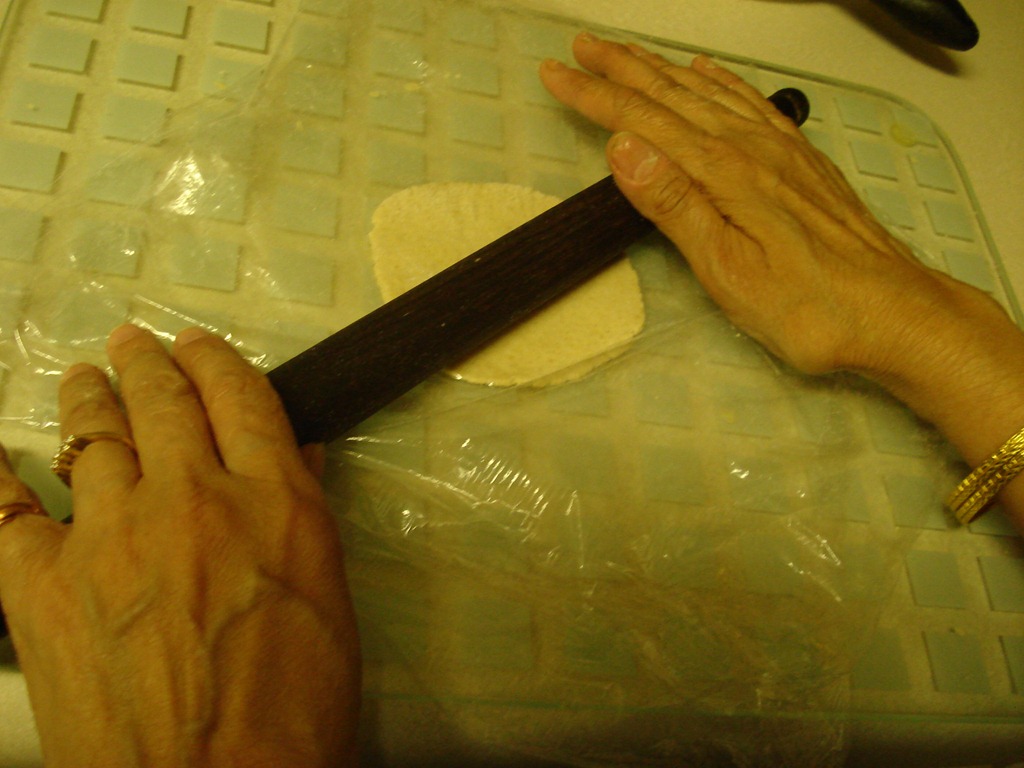
  8. Place the second plastic sheet on top of the ball, in parallel with the bottom sheet.
  9. DSC02685
  10. Roll out gently, rolling evenly on all sides, to form a fairly thin circle of dough about 7” in diameter. DSC02686
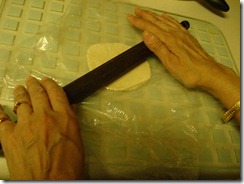
  11. Once rolled out, remove upper plastic sheet and set aside away from stove top.
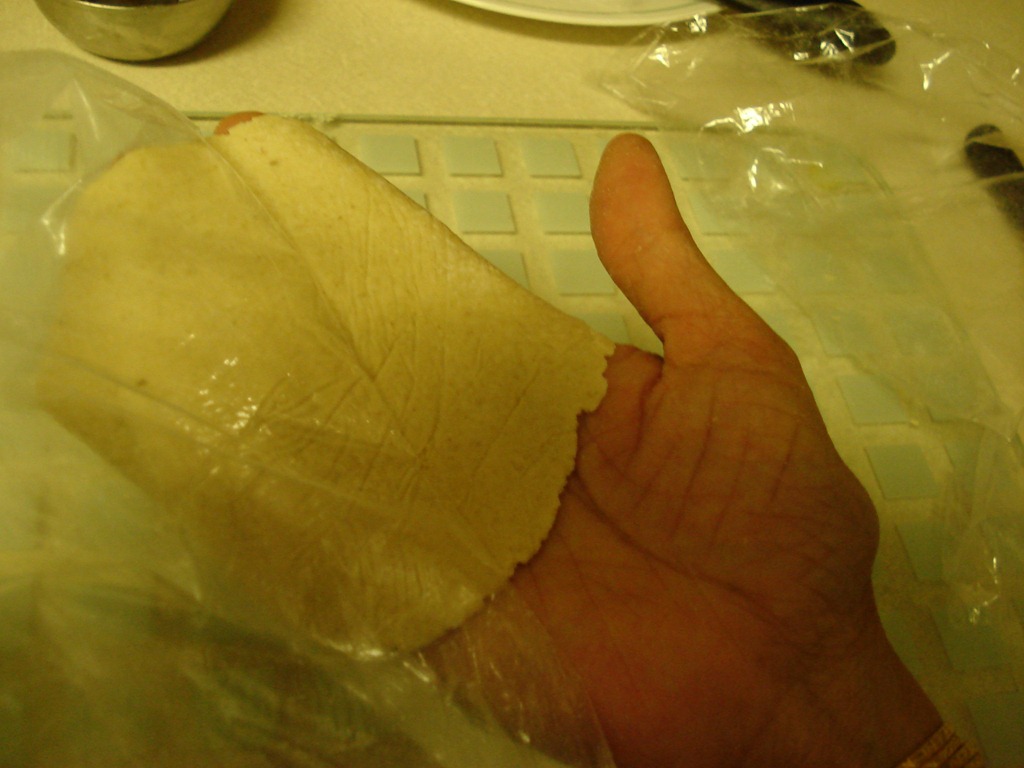
  12. Flip the chapati / tortilla along with the lower plastic sheet onto the palm of your hand.
  13. DSC02687 
  14. With the other hand, peel off the plastic sheet, and place chapati / tortilla on tawa / skillet  
  15. Allow some bubbles to appear, then, using a spatula, flip roti onto the other side and allow it to cook while pressing it gently and moving it around the tawa / skillet a little.
  16. Flip once again and let the first side cook a little more.
  17. Remove from skillet, smear with ghee and serve hot, or keep in insulated container till all chapatis are are made, and then serve. 

DSC02688

Chef’s Tips 

Make Gluten Free Flour parathas just as you would make wheat parathas.  Make a hollow in the ball of dough,place your filling, then lift up all sides and close them so that filling is firmly enclosed within.

Gently press the filled ball, dust with dry flour mix, place on plastic wrap and roll out without pressing too hard with the rolling pin.

Puris can be made without adding the boiled and mashed potato.  Since puris don’t have to be large or thin, you may be able to make them without using the plastic wrap.

Enjoy!

Variation

My friend, Manisha, came up with a great idea–

Instead of mashed potato, use 3 Tablespoons of soft cooked dal for one cup of Gluten Free flour  I use moong dal, but you could try any other dal of your choice.  Dal should be of cake batter consistency.  You may need an extra Tablespoon if the consistency is too thin.

Add dal to flour, mix it in, then add water as required.  The amount of water you need depends on the consistency of dal, so add water a little at at a time.

Chef’s Tip

Cook 1/2 cup dal with a 1//4 teaspoon of turmeric and salt to taste.  Hing (asafoetida) is optional.  Fill it into ice cube trays, and freeze.  Remove frozen dal cubes from trays, put into in freezer bags, and place in freezer.  This way, you will have cooked dal handy before preparing the chapati / tortilla dough. 
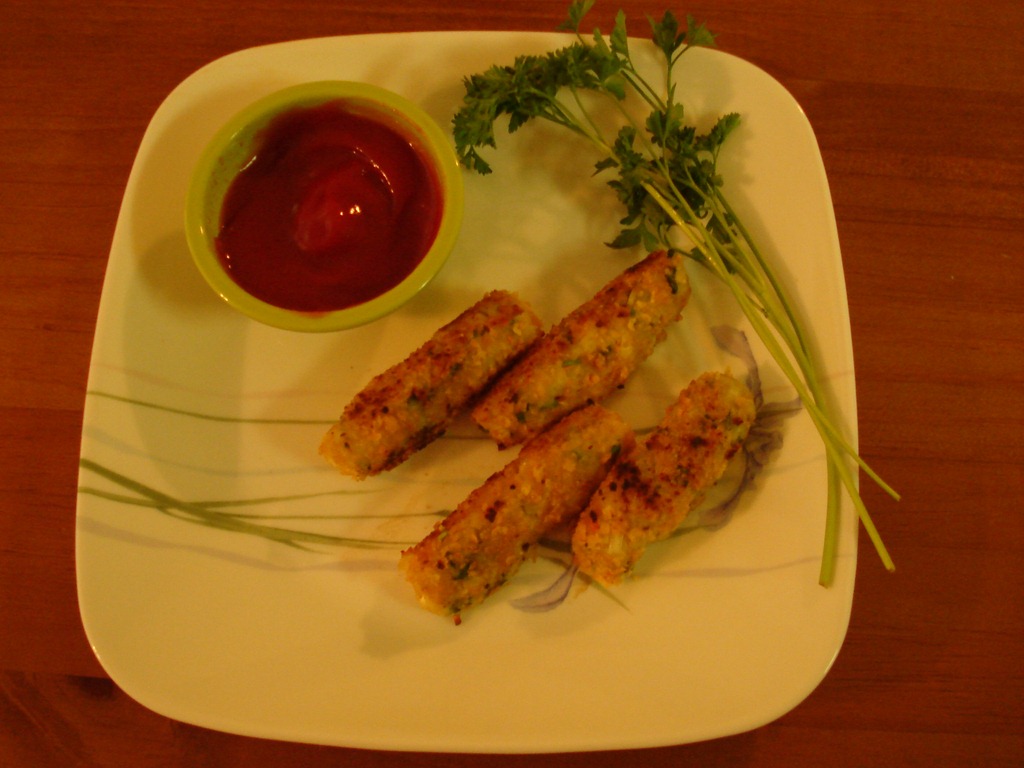
This is a good, healthy, after school snack, or a great side dish to serve with a meat/ vegetable entrée.  Make it ahead of time and warm on a skillet or in the oven before serving.  While potato and cheese are wonderful comfort foods,, the addition of quinoa enhances overall nutritional value, making it both wholesome and tasty.


Quinoa Potato Croquette

Ingredients

  • 1 1/2 cups boiled and mashed potato
  • 3/4 cup cooked quinoa (use about 1/4 cup uncooked quinoa grain to prepare)
  • 1/2 cup shredded mozzarella-cheddar cheese mix  (use shredded soy cheese for a dairy free version)
  • 1/3 cup finely shredded carrot
  • 2 Tablespoons finely chopped parsley
  • 1/4 teaspoon finely chopped jalapeno pepper (green chilly)—optional
  • Salt and pepper to taste

Method

  1. Preheat oven to 375 F
  2. In a large bowl, combine all ingredients and mix them well together.
  3. If mixture feels too soft to work with, add a tablespoon of oat flour and knead it well.
  4. Make 12 –14 balls and roll them between your palms to form an elongated shape.
  5. Place in single layer on a parchment lined baking pan or lightly grease the pan and place the croquettes.
  6. Bake 25 –30 minutes or till croquettes are golden brown in color and feel crisp on the outside.
  7. You may need to roll them over with an oven proof spatula after 15-20 minutes of baking and bake further for 10-15 minutes.
  8. Remove from oven and let cool just a little before serving.

Alternately, these croquettes can be pan/skillet grilled on medium-low heat.  Drizzle a little oil on pan/skillet, and allow oil to heat before placing croquettes

Turn over as sides brown.

Remove from heat, and place on serving platter.

Serve with lettuce, tomato, onions or any salads / veggies of your choice, or just serve as finger foods with a dipping sauce of your choice.

This recipe works like magic.  Once you prepare the basic dry mix, your ten year old will be able to do this all on his/ her own.  All it takes is a minute to mix water into the cake mix, and another minute in the microwave oven.  Before you can say ‘abracadabra’ the cake is ready to eat!

To Prepare the Cake Mix–

  • 2 cups of any store bought Gluten Free Chocolate Cake Mix
  • (The Gluten Free Fudge Brownie Mix also works)
  • 1 cup of my “Grandma’s Gluten Free Flour Mix”  (see Basics, or scroll to the top of the Cakes, Cookies and Desserts Section.
  • 1 Tablespoon cocoa
  • 1 Tablespoon sugar, or to taste (my grandkids prefer it without any sugar added—ready mixes are highly sweetened)
  • 3 teaspoons Egg Replacer
  • 1 level teaspoon baking soda

Store mix in a clean, dry container.

Note:  I add “ Grandma’s GF Flour Mix” for better texture and for adding some nutrition.  It also reduces the excessive sweetness of ready mixes.


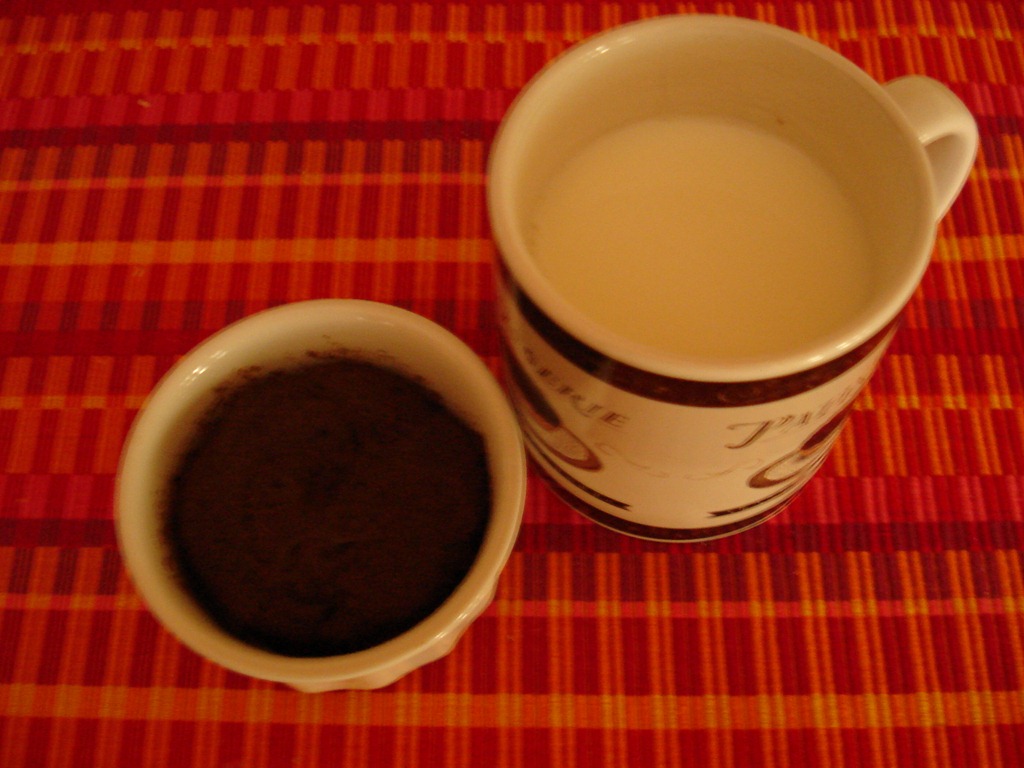
Magic Microwave Cakei


To Make the Cake

  • 3 Tablespoons prepared Cake Mix
  • 2 Tablespoons water
  • 1 teaspoon oil

Mix all ingredients in a bowl. Add a little extra water if mixture is too thick. Spoon mixture into two small ramekins, or in a microwave safe cereal bowl.  Microwave for one minute.

Let cool for a couple of minutes, and ENJOY.

Tastes great topped with whipped cream or ice cream.


NOTE:

If Gluten free Chocolate Cake Mix is not available where you live–

  • 2 cups “Grandma’s Gluten Free Flour Mix”
  • 1 cup oat flour (use regular breakfast oats and place them in dry grinder to make flour)
  • 1 cup sugar or to taste
  • 1/2 cup scant (a little less) unsweetened cocoa
  • 3 teaspoons Egg Replacer (Alternately, use 2 teaspoons baking powder)
  • 1 level teaspoon baking soda.

Mix all dry ingredients well and store in a clean, dry, airtight container.

To make the cake

  • 3 Tablespoons cake mix
  • 2 Tablespoons water (add a little extra if needed)
  • 1 teaspoon oil
  • 1/2 teaspoon vanilla extract.

Spoon mixture into two ramekins or in a microwave safe cereal bowl, place in microwave oven for 1 minute.

Let cool for a couple of minutes, and your magic 3-2-1 cake is ready to eat!

Fruits are the best snacks.  They are terrific sources of nutrients—vitamins, minerals and phytochemicals.

But kids with multiple allergies may not be able to eat from the entire variety of fruits.  Some fruits are known to produce allergic reactions, especially fruits like mangoes, papayas, pineapples, bananas, avocados, some kinds of berries, and in rare cases, apples. 

It is good practice to follow a few precautions before trying any new food, even fruit.  One strategy is to mash and apply that food to the skin to see if it produces any kind of itching, rash, redness or hives.  Even if no such symptoms occur, it is wise to give a very small quantity while introducing that food for the first time.  Allergic reactions can appear after several hours, so it is best to watch and wait before continuing to serve the new food.

Allergists recommend that all fruits should be washed thoroughly.  Many fruits have been treated with pesticides and fungicides.  Peeling is important, especially when fruits and veggies have been waxed, as in the case of apples, pears, cucumbers and squashes, 

Conventionally grown strawberries are often treated with a fungicide and must be washed well.

No plant/fruit wants to be eaten.  Some have ways of fighting back, with chemical ‘weapons’ which can attack the body’s immune system, producing a damaging mediator, namely, histamine.

Some fruits cause allergy-like reactions because they contain histamines—e.g. bananas, pineapples, avocados.

Pineapples and papayas contain certain protein breaking enzymes which can attack the mast cells, which are a part of the body’s immune system.  Nutritionists recommend that these fruits should not be eaten on an empty stomach.  Canned pineapple is safe, as the heat used in canning destroys this enzyme.  Mango is another such fruit and must be introduced with caution.

Dried fruits are often treated with sulfites to prevent them from browning.  Kids with asthma could react to sulfites.

Fruits and veggies fall into certain botanical categories, ‘food families’.  Although it helps to know which ‘family’ a fruit or a vegetable belongs to, there is no thumb rule which indicates that a child who is allergic to a food from a certain group will be allergic to other foods from the same group.  Kids allergic to ragweed, may not necessarily be allergic to bananas which belong to the same family as ragweed..  There can be cross reactions with pollens such as birch pollens with apples.  Even peaches, plums and cherries are know to affect kids with birch pollen allergy.

The keyword here is caution.  The good news is that there are lots of options with fruits.


MORE ‘FRUITY FACTS’

One apple has more fiber than a serving of oatmeal.  A medium apple has nearly 160 g of potassium, somewhat similar to oranges and bananas.  Researchers in the UK say that kids who are big apple eaters have better lung function and are at a lower risk of asthma.

Orange juice, when taken with meals, increases the absorption of iron and calcium from food.

Juice with pulp is better than pulp free juice.  Fruit pulp not only contains fiber, but it also has minerals like calcium, vitamins and antioxidants.

Most fruits are high in Vitamin C, the big antioxidant.  Berries and citrus fruits are great sources of this vitamin.  Fruits, as key sources of Vitamin C are extremely important for kids who are on regular maintenance medications for allergy.  Since steroids reduce the absorption of Vitamin C from the gut, these kids need to have that extra bit of Vitamin C.

An avocado is a fruit, not a vegetable.  It has 60% more potassium than a banana, and is cholesterol free.  It contains the good, monounsaturated fatty acids like olive oil.  Mashed avocado can be used as a butter alternative—just add  pinch of salt and spread it on those rice crackers.

This is a satisfying comfort food.  Serve a favourite hot soup with this cold salad, and you have a wholesome meal for everyone at the table.

If wild rice is not available use brown rice, preferably the basmati variety.

To know more about wild rice, read my note on RICE, in the BASICS category

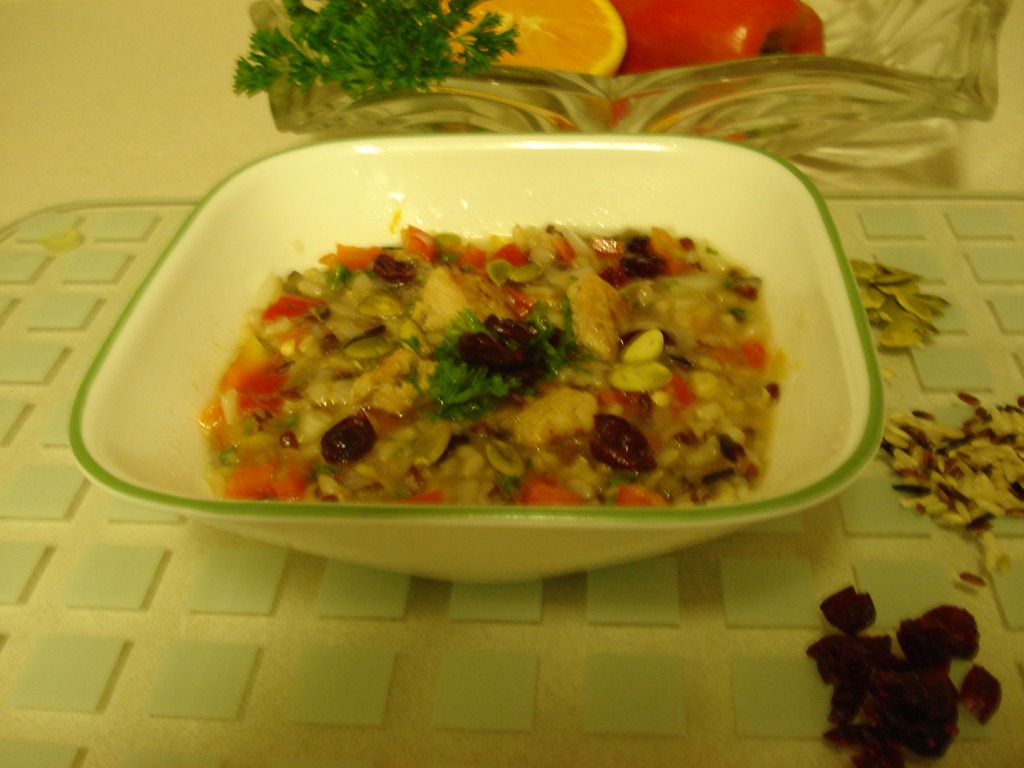
wild rice salad

Ingredients

  • 3 cups cooked wild and brown rice blend. (one cup uncooked rice will yield almost 3 cups cooked rice).
  • 2 cups cooked turkey breast cut into 1/2 inch cubes.  (Use chicken if you like)
  • 1 medium red onion, finely chopped.
  • 1 large red pepper, chopped
  • 3/4 cup dried cranberries
  • 1/2 cup orange juice
  • 1/4 cup pumpkin seeds (optional)
  • 1/4 cup chopped fresh parsley
  • 1/4 cup rice vinegar
  • 3 Tablespoons olive oil
  • 3 teaspoons orange zest (grated orange rind)
  • 3 teaspoons brown sugar
  • 1 teaspoon fresh minced garlic
  • 1/4 teaspoon cayenne pepper(red chilly powder), or to taste
  • Salt to taste.

Method

  1. Gently stir in 1 cup washed and rinsed wild and brown rice blend in 3 cups boiling water, using a large saucepan.
  2. Reduce heat, cover and allow rice to simmer for 30 minutes.
  3. Uncover and check to see if rice is well cooked, or needs a little more water.  Cover and cook for a few more minutes if required.
  4. (I pressure cook for 10-12 minutes).
  5. Fluff cooked rice with a fork, and allow it to cool.
  6. In a large bowl, combine cooked rice, cooked and diced turkey breast,
  7. chopped onion, bell pepper and parsley.
  8. In a smaller bowl, whisk together orange juice, rice vinegar, olive oil, orange zest, garlic, brown sugar, salt, and cayenne pepper.
  9. Pour and mix gently into the rice and turkey mixture.

Make a few hours ahead and refrigerate before serving.


Did You Know–

A quarter cup of cranberries yields just 90 calories.

Cranberries are a good source of Vitamin C, a quarter cup serving gives us about 20% of our daily requirement.

Cranberries also contain potassium and phytochemicals

They do not have any fat or sodium, and are high in fiber

Pumpkin seeds are rich in Vitamin E.

Parsley is a good digestive aid, and is full of goodness—Vitamins C and A, iron, copper and manganese. 

What is MSG?

Glutamic acid is one of the amino acid links in protein.  When glutamic acid is freed from the protein chain, it becomes soluble in water or body fluids, where it meets a sodium molecule which floats with it.  Hence the name Mono Sodium Glutamate or MSG.

In most foods, some of the glutamic acid is freed from protein.  Since it is not bound to protein, this freed glutamic acid or MSG is absorbed quickly in the blood stream.  If the amount is small, the impact is non existent.  If the amount is large, its fast release and absorption can overwhelm the body’s metabolism, and trigger a reaction.

MSG is sometimes difficult to identify because it is hidden in other food additives, or is the result of food processing, when it is added as a flavor enhancer.

Manufacturers add it as an ingredient that is part of another ingredient, such as “hydrolyzed vegetable protein”.  This is simply vegetable protein that is broken down (hydrolyzed) into its constituent amino acids

MSG may even hide behind a label like “natural flavors”.

Milk protein contains about 20% glutamic acid, but it is firmly bound to the protein chain.  In the cheese making process, fermentation breaks apart the protein, and releases MSG.  The more AGED the cheese, the more milk protein is digested, and more MSG is released.

Highly fermented soy sauce could also have high levels of MSG

It is best to exercise caution with fermented foods

Certain foods, such as peas, corn, mushrooms and tomatoes contain high levels of free glutamic acid.  BOILING removes much of the water soluble MSG. When corn is removed from the cob and boiled, each kernel gets exposed to boiling water and loses most of the MSG.

MSG is probably lost during some forms of corn processing which occurs in products such as chips, syrups etc.

Cooking helps to minimize the MSG in food.  Beans and sprouts, especially must be cooked.

Soups

Soups can be tasty, varied and wholesome. At the toddler stage, soups provide the best basic nutrition. Tasty and creative combinations add a new dimension to eating out of jars, jars and more jars. Moreover, it is better to develop a liking and taste for veggies at this early stage. A 2002 survey tells us that one in five babies is “eating candy every day. And the #1 vegetable for toddlers isn’t pureed carrots: its French Fries.”

For older kids, soups are good comfort foods. Soup bases and purees can be used in many interesting ways with pastas and meats to provide wholesome meals. Even if some foods have to be avoided, there’s plenty which one CAN have and enjoy,and pack in lots of nutrition too.

Homemade, fresh/frozen soups have many nutritional advantages over canned/packaged soups—

  • The high heat typically used in making canned and jarred foods softens veggies and causes them to lose color, flavor and nutrient value, while meat can shrink and toughen.
  • The thickness of canned soups often comes from added thickeners.
  • Many of these soups are loaded with sodium.
  • The main additives of canned foods are salt and sugars, as in the case of fruit.

All Soups recipes in this section yield 4 adult servings.

The whole family can enjoy these soups—in fact, it is essential to have part of a meal at least in common with the child who has food allergies. This reduces the sense of exclusion that food sensitive children may develop.

I like to double the recipe and freeze at least half of it, in such a way that even small portions can be taken out right after that soccer game, or to satisfy hunger pangs on a cold evening.

To Freeze Soups

  • Remove the portion to be kept aside, before diluting the rest with milk, broth or additional water.
  • Pour the thicker portion into ice trays.
  • Cover with plastic foil and freeze for at least 6 hours.
  • Remove ice trays. Invert, hold slightly above the plastic foil that will come off the tray, Twist the tray so that frozen cubes will drop onto plastic foil.
  • Pack in Ziploc freezer bags taking care to eliminate as much air as possible before sealing the bag
  • Only the required number of cubes can be removed as and when needed. Microwave and dilute with milk, broth or water, or add creamed silken tofu for a dairy free alternative.

This delicious soup is a meal by itself!

Although parmesan cheese is great to add, I avoid using it, as it is an aged cheese, and likely to have high levels of MSG, or mono sodium glutamate, which could trigger an allergic reaction.  Mozzarella and cheddar cheeses are safer to use.  Of course, if Parmesan works for you, then go ahead.


Easy Minestrone Soup

Ingredients

  • 1 16 ounce can of pureed or strained tomatoes
  • 2 cups chicken / vegetable broth
  • 2 precooked Italian sausages (optional)
  • 1 large potato, peeled and cubed
  • 1large carrot, peeled and diced
  • 1 medium onion, chopped
  • 1 small can (about 7 ounces) small navy beans, drained and rinsed
  • 1 small can red kidney beans, drained and rinsed
  • ( I like to soak dried beans in a large bowl of water for 4-6 hours, or overnight, cook them in a pressure cooker, then use them)
  • 1 cup small elbow shaped rice or quinoa pasta, cooked according to package directions
  • 1/2 cup finely chopped fresh parsley
  • 1 teaspoon fresh, minced garlic
  • 1 teaspoon dried basil, or a few fresh basil leaves, washed and torn roughly
  • 1/2 teaspoon dried oregano
  • 1 cup finely cubed mozzarella cheese
  • 1/2 cup grated cheddar cheese
  • 2 Tablespoons olive oil
  • Salt and pepper to taste.

Method

  1. In a large saucepan, heat olive oil and add garlic.
  2. Allow garlic to sizzle and brown a little, then add onions.
  3. Saute onions for a minute or so, till they soften.
  4. Add cubed potato and carrots, and saute to coat them with oil
  5. Stir in pureed / strained tomatoes, and chicken / vegetable broth
  6. Gently toss in sausages and beans
  7. Cover saucepan, and let the soup simmer on medium heat for 7-10 minutes, or till vegetables are tender
  8. Add cooked pasta, parsley, herbs, salt and pepper and let simmer for a minute.

Serve hot or warm, whichever way you like it, and garnish with cheese.

Note

For a dairy free serving, use finely cubed firm tofu instead of the cheeses.  Add tofu along with the cooked pasta.

Rice, the most non allergenic of food grains, is a staple in any allergy free, gluten free diet.  Mostly, it is an essential accompaniment and a good bulk food which provides eating satisfaction.

When rice is milled and polished (such as white rice), it loses some of its nutrients, especially the B group vitamins, Vitamin E, iron and a few other micronutrients. White rice sold in stores in the US is generally fortified, the lost nutrients added on and prewashed, so further washing is not required.  Washing of rice also diminishes nutrients, but it is necessary to wash rice thoroughly, rinsing out the water 3-4 times, in order to remove impurities and pesticides which may have been used.

Parboiled rice retains more nutrients than polished, white rice.  Brown rice is richer in most nutrients and especially in fiber. but protein content is more or less similar to that in white rice.

Although rice has less protein than wheat, the quality of protein in rice is generally superior and is better assimilated by the body.

Of all the varieties of rice, basmati has the best kinds of complex carbs, which are burned slowly, thus providing longer lasting energy.  Basmati rice has a Glycemic Index which is lower than almost all other kinds of rice.  The stickier the rice, the higher it is in starch content, and will therefore have a higher Glycemic Index.

Wild rice, which is more of a gourmet rice has excellent nutritive value.  It is rich in protein, fibre and minerals like iron, potassium, magnesium and phosphorus.  It is actually a seed of a variety of grass that grows around lakes and rivers.  In the US, wild rice comes from a type of grass that grows wild in the Great Lakes region.  It has a nutty flavour and a chewy texture.

Because wild rice is pricey, it is often mixed with other grains, most often with brown rice as both require the same amount of cooking time.  It also needs to be washed thoroughly.  About three times the amount of water works well for wild rice.

Generally, rice has to be used more as an accompaniment, so that other nutritious foods go down well.

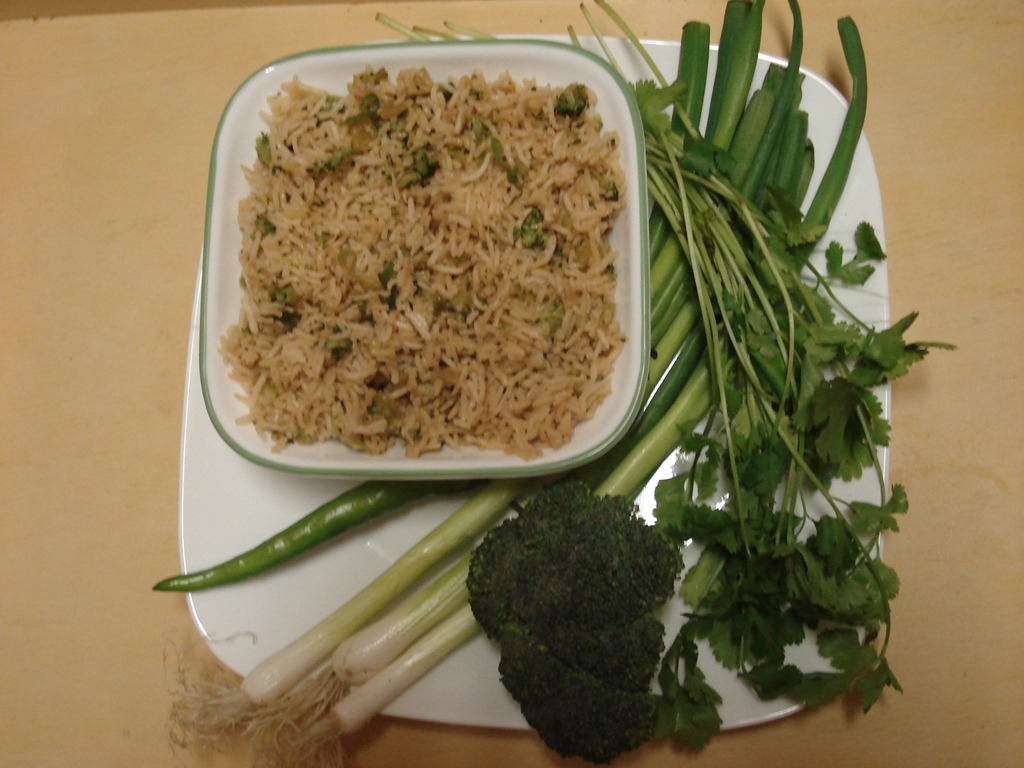
Try this flavourful fried rice, a delicious accompaniment with Chinese meat and poultry.  Great to serve with tofu,( if soy is not an issue) or with any other vegetarian entrée, this rice is a favourite with all my grandchildren, the one with allergies, and the ones without

Although I use dairy and soy in some of my recipes, I give substitutes whenever possible, but I completely avoid other allergenic foods such as wheat, eggs, nuts and fish.  If you can have eggs or fish, just go ahead and add to this rice recipe.


green rice

Ingredients

  • 1 cup rice
  • 11/2 cups very finely chopped broccoli
  • 1/2 cup finely chopped green onion
  • 1/4 cup finely chopped fresh cilantro
  • 1 cup cooked, shredded chicken or pork (optional)
  • 3/4 cup chicken/vegetable broth
  • 3 Tablespoons oil
  • 1/2 teaspoon fresh, crushed garlic
  • 1 teaspoon very finely chopped large green chilli pepper (or to taste)
  • 1 Tablespoon Gluten free Soy Sauce (tamari)—optional
  • 1 teaspoon lime/lemon juice
  • 1/2 teaspoon salt, or to taste

Note

I use the larger variety of green chilli peppers as they are milder.  The small ones are much more pungent and packed with fire!

Method

  1. Cook rice with 2 cups water, 1/4 teaspoon salt and lemon juice.  The lemon/lime juice will prevent rice grains from becoming sticky, and will enhance flavour.  Some varieties of rice may need a little extra water.
  2. Fluff out the cooked rice with a fork and allow it to cool a little.
  3. In a large wok, heat oil on medium heat and add crushed garlic and very finely chopped green chilli pepper.
  4. Add broccoli, sauté a little, then cover and cook for a minute.
  5. Add cooked meat, green onions and chicken/vegetable broth.
  6. Add soy sauce and chopped cilantro.
  7. Gently fold in the rice.
  8. Mix all ingredients well, then cover wok for a couple of minutes or so to allow the fried rice to warm well and absorb flavours.
  9. Remove from heat, and serve.

A great dish for the whole family!